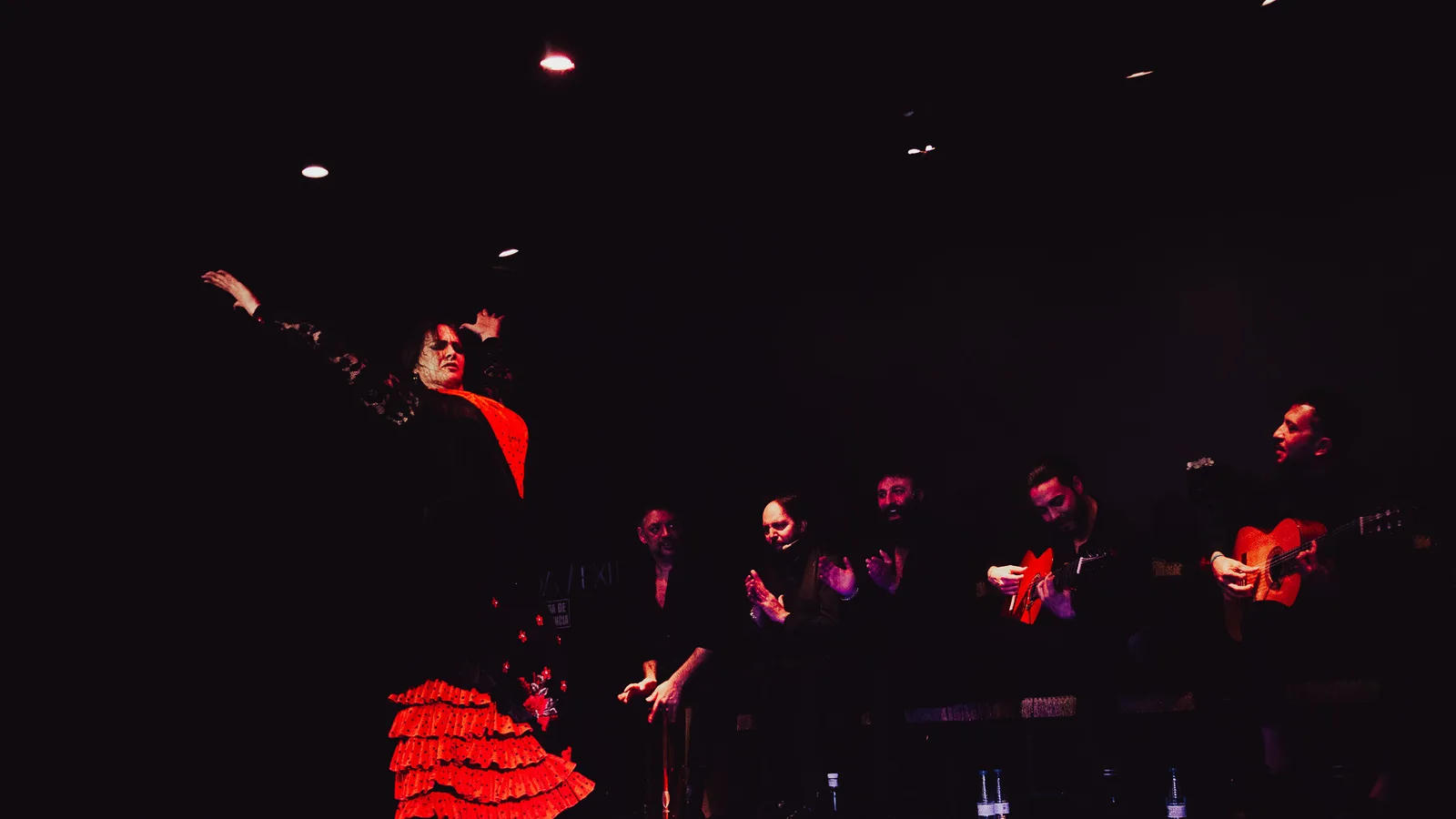
Flamenco is one of the most intense live experiences you can have in Spain — but if you've never seen it, the words around it (tablao, cante, cuadro, palo) can be confusing. This guide clears that up in plain English, so you walk into your first show knowing exactly what you're watching. When you're ready to pick one, we recommend a single show in each of six cities.
What is a flamenco show, exactly?
A flamenco show is a live performance built from three intertwined art forms: cante (the song), toque (the guitar) and baile (the dance). Add palmas (rhythmic hand-clapping) and jaleo (the shouts of encouragement you'll hear from the performers themselves), and you have the full picture. It isn't choreographed like ballet; much of it is improvised within strict rhythmic patterns called compás, which is why no two nights are ever quite the same.
What is a tablao?
A tablao is a venue dedicated to live flamenco, named after the wooden stage — the tablao — that the dancers perform on. The defining feature is intimacy: you sit close, sometimes just a few metres from the footwork, and you feel the percussion of the heels through the floor. This is the opposite of a large theatrical production, and it's the format we recommend for a first, authentic experience. Most tablaos seat between 50 and 150 people and run one or more sessions each night.
What to expect on the night
A typical tablao show runs 60 to 75 minutes. Seating is usually assigned on arrival rather than numbered, so arriving 15–30 minutes early gets you closer to the stage. A performance is delivered by a cuadro — a group of a singer or two, a guitarist and one or more dancers — who take turns and build in intensity. You don't need to understand the Spanish lyrics to be moved; flamenco communicates through rhythm, voice and movement first.
What should I wear?
There's no dress code at a tablao. Smart-casual is perfect — wear what you'd wear to a nice dinner. Venues are often small and can get warm under the stage lights, so comfortable clothing beats formal. That's genuinely all there is to it.
Flamenco show vs dinner show: which is worth it?
Many venues offer a dinner-and-show package. Our honest take, the same we give on every city page: unless you specifically want the convenience of one booking, the show-only ticket plus dinner elsewhere almost always means better food and better value — the kitchen rarely matches the stage. The exception is when the venue's format is built around the meal. We flag which is which on each city page.
Which city should you see flamenco in?
All six cities in our guide offer excellent flamenco, but each has its own character. Here's the short version — each links to our full recommendation for that city:
- Seville — the emotional heartland of flamenco, and home to the most atmospheric intimate venues.
- Jerez de la Frontera — the cradle of the bulería and of flamenco's great singing families.
- Granada — the only place to see the zambra, performed in the hillside caves of the Sacromonte.
- Madrid — the capital concentrates the highest number of top professional artists on any given night.
- Barcelona — a cosmopolitan scene with historic tablaos on and around La Rambla.
- Málaga — Andalusian flamenco on the Costa del Sol, with hands-on options for beginners.
Not sure which fits your trip? Start from our home page to compare all six at a glance, or message us on WhatsApp and we'll point you to the right one.
Frequently asked questions
What is a flamenco show?
A live performance combining cante (song), toque (guitar) and baile (dance), usually with palmas (clapping) and jaleo (shouts), performed intimately in a tablao.
What is a tablao?
A venue dedicated to live flamenco, named after the wooden stage the dancers perform on. Shows are close-up and intimate, typically seating 50–150 people.
What should I wear to a flamenco show?
There's no dress code. Smart-casual is ideal — what you'd wear to a nice dinner. Venues can get warm, so dress comfortably.
How long is a flamenco show?
Most tablao shows run 60 to 75 minutes. Dinner or workshop formats run longer. Arrive 15–30 minutes early, as seating is assigned on arrival.
Which Spanish city is best for flamenco?
All six in this guide are excellent. Seville and Jerez are the historic heartland, Granada has the unique cave zambra, and Madrid has the most top artists nightly. The best city is the one you're visiting.